
Audio & Aesthetics: How to Blend Speakers With Your Decor
Do you feel like your living room is a constant battleground between world-class sound and high-end design? You’ve invested in premium gear, but those bulky towers and “spaghetti” cables make your space look more like a laboratory than a sanctuary.
It’s frustrating when your passion for music creates a visual eyesore that disrupts the flow of your home. You shouldn’t have to choose between an immersive listening experience and a beautiful interior.
The good news? You can have both. This guide will show you how to integrate high-fidelity audio into your home so seamlessly that it either vanishes into the walls or stands out as a stunning centerpiece.
- The Philosophy of "Invisible" Audio: Making Gear Vanish
- Using Audio Gear as a Design Statement
- Solving the Cable Chaos: The Silent Room Killer
- Acoustic Treatment That Looks Like Art
- Professional Integration: Learning from the Experts
- The "Wife Acceptance Factor" (WAF) Explained
- Conclusion
- Frequently Asked Questions (FAQ)
How to Blend Audio Equipment with Your Room Style
To blend audio equipment with your room style, you must balance acoustic placement with visual harmony. Use built-in architectural speakers for a minimalist look, or choose “statement” gear with wood finishes to match your furniture. Mask unsightly wires with cord covers or furniture routing, and utilize “hidden” storage like breathable media consoles to keep components out of sight without overheating.
The Philosophy of “Invisible” Audio: Making Gear Vanish
If you prefer a clean, minimalist aesthetic, your goal is camouflage. You want the sound to be “felt, not seen.”
1. Architectural Speakers (In-Wall & In-Ceiling)
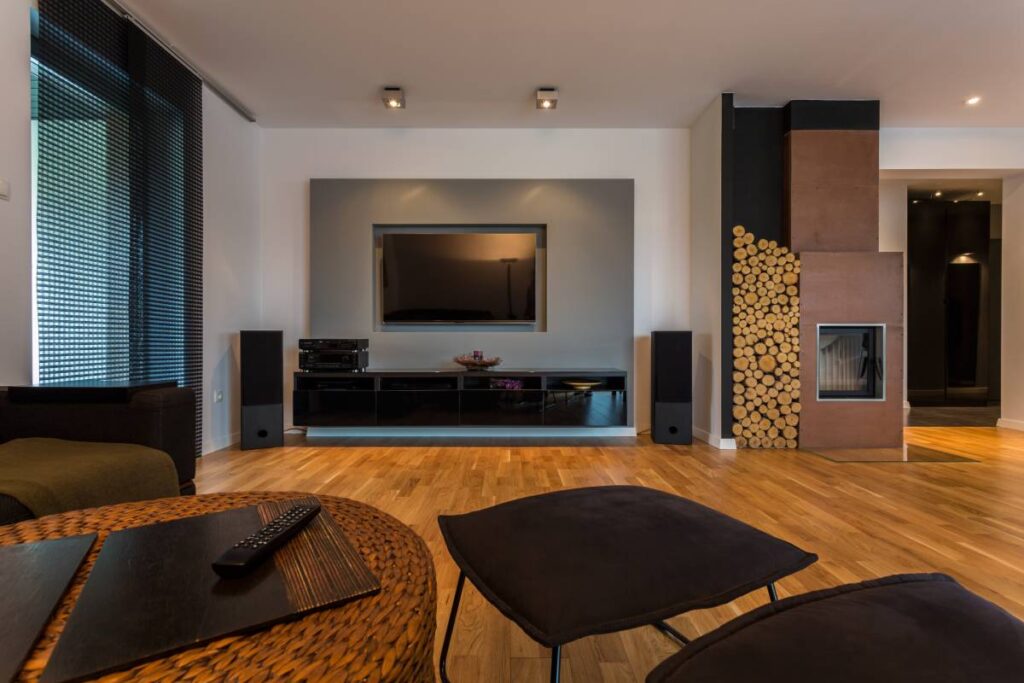
The ultimate way to blend audio is to make it part of the architecture. Modern in-wall speakers come with paintable grilles that allow them to disappear into your color scheme.
2. The Power of Breathable Cabinetry
Don’t just shove your amplifier into a cupboard. Use a dedicated media console with slatted doors or IR-friendly glass. This allows remote signals to pass through and provides essential ventilation for your gear.
3. Bookshelf Camouflage
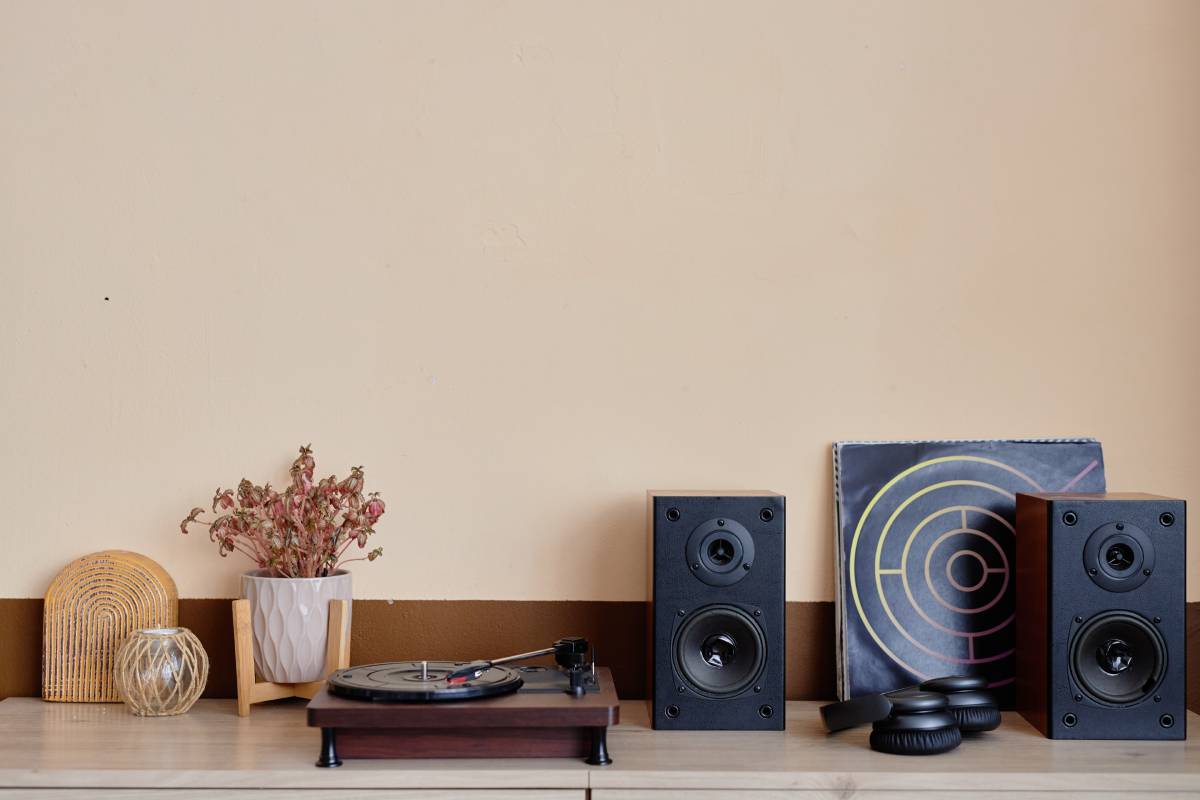
Place smaller monitors on bookshelves surrounded by books, plants, and ceramic decor. This breaks up the “tech” look and integrates the equipment into the room’s natural textures.
Pro Tip: Ensure the front of the speaker is slightly forward of the shelf edge to prevent “baffle interference,” which can muddy the sound.
Using Audio Gear as a Design Statement
Sometimes, the best way to “blend” is to lean in. High-end audio equipment is often a work of art in itself.
Match Your Wood Finishes
If you have a Mid-Century Modern home, look for speakers with Walnut or Teak veneers. Matching the wood grain of your speakers to your flooring or furniture creates an intentional, curated look.
If your home features a classic or vintage theme, you can maintain that timeless look by pairing your audio gear with reproduction antique furniture pieces, which offer the aesthetic charm of the past with the structural integrity needed to support heavy modern amplifiers.
The “Hero” Piece
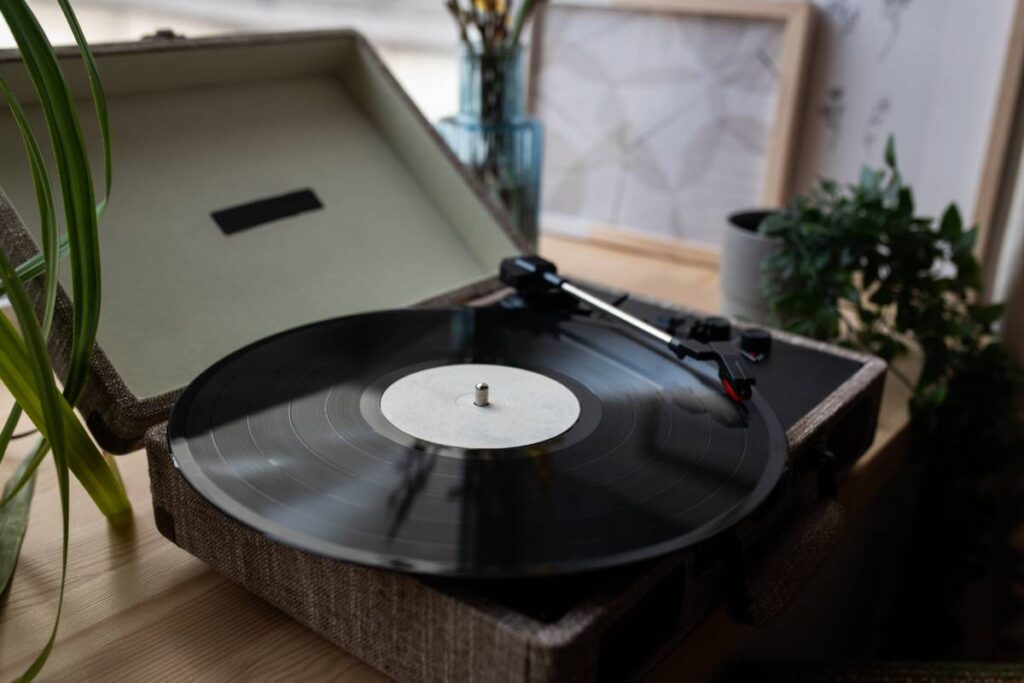
Treat a high-end turntable like a sculpture. Place it on a dedicated pedestal or a backlit shelf. By making it a focal point, it becomes a conversation starter rather than clutter.
Just as integrating modern LED wall art allows you to blend technology with visual expression to create a specific mood, your speaker selection should be viewed as a functional extension of your room’s lighting and color palette.
Solving the Cable Chaos: The Silent Room Killer
Nothing ruins a “vibe” faster than a tangled mess of black wires.
- Cable Trunks: Use paintable D-line trunking along baseboards to hide speaker wire.
- Furniture Routing: Use Velcro ties to strap cables to the back legs of your media stand.
- Wireless Solutions: For surround speakers, consider high-quality wireless transmitters (like WiSA) to eliminate the need for long cable runs across the floor.
Acoustic Treatment That Looks Like Art
Creating the perfect listening room isn’t just about the speakers; it’s also about understanding noise pollution and how ambient sounds from outside or other rooms can interfere with your audio’s clarity and soundstage.
The Solution: Acoustic Art Panels. Many companies now print high-resolution photography or abstract art onto acoustic fabric. These panels act as sound absorbers (reducing echo) while appearing to be standard gallery-wrapped canvases.

Professional Integration: Learning from the Experts
The challenge of blending high-performance audio with aesthetics isn’t unique to the home; it’s a hurdle in luxury vehicles and marine vessels too. Industry leaders like Bankstown Sound have pioneered this “stealth wealth” approach to audio.
By utilising custom joinery and specialised mounting, specialists like Bankstown Sound prove that even in the most confined or design-heavy spaces, you can achieve professional-grade acoustics without a single wire showing. Whether you’re styling a living room or a luxury cabin, the principle remains the same: precision engineering should be heard, not seen.
The “Wife Acceptance Factor” (WAF) Explained
In the audiophile world, WAF refers to the likelihood of a partner agreeing to large equipment in shared living spaces. To maximize WAF (or “Partner Acceptance”):
- Prioritize Symmetry: Humans find symmetrical layouts more visually “calm.”
- Go Small with Subs: Use “Micro” Subwoofers that can be tucked under a couch or end table.
- Use Texture: Replace metal grilles with fabric ones that match your sofa upholstery.
Conclusion
Blending world-class audio with your personal style isn’t about compromise—it’s about integration. Whether you choose to hide your system behind breathable cabinetry or showcase a vintage turntable as a masterpiece, the key is intentionality.
What is your biggest struggle when it comes to styling your tech? Tell me in the comments below!